
When exploring modern welding techniques for your projects, it’s natural to ask, ‘What is laser welding?’
This article provides a comprehensive guide to laser welding, covering the process, types of laser welding machines, key welding techniques, and practical applications.
You will also gain insights into the advantages of laser welding and considerations for selecting professional laser welding services for your projects.
By understanding the laser welding process and its potential applications, you can make informed decisions about integrating laser welding technology into your operations to achieve precise, reliable outcomes.
What Is Laser Welding?
The laser welding process involves the emission of a coherent, concentrated laser beam that melts the surfaces of the materials to be joined. This allows for deep penetration and strong weld integrity.
Laser welding operation requires precise control over welding parameters, including laser power, beam focus, and welding speed. Adjusting these factors ensures that the weld meets specific weld quality and material requirements.
Materials can be joined with or without filler material, and the process is adaptable for dissimilar metals and thin metals, offering flexibility that other welding techniques may not provide.
Types of Laser Welding
Understanding the types of laser welding can help you identify the approach that meets your project’s requirements.
Each method offers unique advantages based on material thickness, precision requirements, and production speed, enabling you to make informed choices for high-quality outcomes.
Keyhole Laser Welding
Keyhole welding uses a high-power-density laser beam to create a narrow, deep cavity. This method is particularly suited to thicker materials or applications that demand deep welds with consistent structural integrity.
Its precision can help reduce unnecessary material handling and rework, allowing your projects to progress smoothly.
Conduction Laser Welding
For projects involving thin materials, conduction laser welding offers controlled, low-heat-input welding, minimising thermal distortion.
This makes it an ideal choice for sensitive components, including optical components and medical devices, where accuracy and material preservation are crucial. By selecting this method, you can achieve reliable welds without compromising delicate structures.
Hybrid Laser Welding
Hybrid laser welding combines the focused energy of laser technology with other welding methods, such as arc welding, to achieve deeper penetration while maintaining high welding speeds and consistent weld quality.
This approach provides flexibility for projects that require both efficiency and precision, enabling your operations to balance speed with reliable outcomes.
Types of Lasers Used in Welding
Choosing the right laser type can significantly impact the efficiency, precision, and overall outcome of your laser welding work.
Each laser type is tailored to specific applications, allowing you to match your operational needs with a suitable technology.
Fibre Lasers
Fibre lasers are highly efficient for high-speed welding and can achieve high-quality welds across a wide range of materials.
Their precision and reliability make them a practical choice for projects where consistency and minimal post-processing are important.
Diode Lasers
Diode lasers offer a cost-effective solution for low-power applications, making them particularly suited for thin metals or projects that require focused energy without excessive complexity.
They deliver reliable results while helping manage operational costs.
Solid-State Lasers
Solid-state lasers deliver a stable, precise energy output, suitable for applications requiring deep penetration.
These lasers support meticulous welding techniques, ensuring the integrity of the weld area even in more demanding tasks.
Ruby Lasers
Ruby lasers are designed for niche applications that require high precision. Their capabilities make them suitable for intricate tasks such as optical components or delicate medical devices.
Selecting the right laser welding equipment is essential not only for achieving consistent results but also for maximising efficiency, reducing errors, and maintaining predictable outcomes in your projects.
By aligning your equipment choice with your specific materials and production needs, you can ensure your laser welding operation delivers dependable, repeatable results.
Laser Welding Equipment
The right laser welding equipment can make a noticeable difference in the efficiency, precision, and consistency of your projects. Equipment options vary in complexity and cost, but selecting the appropriate system ensures that your laser welding work is both reliable and adaptable to your specific needs.
Modern laser welding machines often include automated controls, beam energy adjustment, and precise focusing capabilities. These features allow you to maintain consistent weld quality across both thin materials and thicker materials, reducing the likelihood of errors or rework.
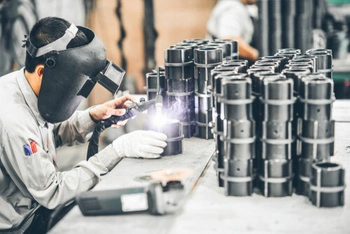
Key components of a laser welding setup include:
- The laser source, each offering distinct advantages depending on your application.
- Optical systems designed to focus the laser beam accurately, ensuring precise energy delivery to the weld area.
- Welding tables and laser welders that support careful material handling and alignment, enhancing control during the laser welding process.
While laser welding equipment costs can be higher than those of traditional welding methods, the potential for minimal thermal distortion, high welding speeds, and reduced post-processing can make the investment worthwhile for large-scale projects.
By equipping yourself with the right tools, you can achieve consistent, high-quality welds and maintain operational efficiency, which benefits both productivity and long-term cost management.
Advantages of Laser Welding
Recognising the advantages of laser welding can help you determine whether this technology aligns with your project goals and operational needs.
By understanding the benefits, you can make informed decisions about incorporating laser welding technology into your workflow.
- Minimal Thermal Distortion: The low-heat input of laser welding reduces the impact on surrounding material, helping maintain structural integrity and limiting post-processing requirements.
- High Precision: A concentrated heat source targets the weld area directly, ensuring accuracy and consistency across each joint.
- Ability to Weld Thin Materials: Projects involving thin metals benefit from precise energy delivery, avoiding warping or material damage.
- Versatility for Dissimilar Metals and Complex Geometries: Laser welding can accommodate complex components, providing flexibility that supports innovative designs and specialised applications.
- High Welding Speeds: The efficiency of laser welding machines can boost productivity on larger-scale projects, helping you meet deadlines without compromising weld quality.
- Clean Welding Process: Reduced reliance on filler material results in smoother, neater joints and a streamlined workflow.
- Consistent Weld Quality: By controlling welding parameters, each joint meets defined standards, ensuring predictable outcomes across multiple runs.
These benefits are particularly relevant for projects involving sensitive or precision materials, such as fibre optic cables, optical components, or medical devices.
By leveraging these advantages, you can maintain high-quality standards while optimising efficiency, making laser welding a practical option for a wide range of applications.
Comparing Laser Welding to Traditional Welding Methods
Traditional welding methods, such as arc welding, have been relied upon for decades due to their versatility, accessibility, and proven ability to join a wide variety of metals. They are well-suited to many industrial applications and offer reliable performance across both small-scale and large-scale projects.
Laser welding, on the other hand, delivers a focused laser beam, enabling highly precise welds with minimal thermal distortion and controlled heat-affected zones. This precision can be especially valuable for thin metals, sensitive components, or applications that demand high weld quality and consistent results.
In practice, many projects benefit from a combination of approaches. Integrating laser welding with traditional methods can balance speed, flexibility, and precision, enabling optimal results across a wide range of materials and complex geometries.
By considering the strengths of both approaches, welders can select the welding method, or combination of methods, that aligns with their operational requirements, project scale, and material specifications.
Applications of Laser Welding
Laser welding applications span multiple industries due to its adaptability and precision. Common applications include:
Automotive Industry
Laser welding is often used in vehicle manufacturing to join thinner metals in body panels, achieve high-quality welds in structural components, and produce parts.
Aerospace
The low-heat input and deep penetration of keyhole welding help maintain structural integrity in lightweight aerospace materials.
Industrial Manufacturing
From thicker materials to thin metals, laser welding supports a wide range of materials and operational requirements, making it valuable for industrial-scale projects.
Understanding Welding Parameters
Achieving consistent, high-quality results in laser welding requires careful management of welding parameters.
Understanding these factors allows you to control the laser welding process with precision, helping ensure reliable outcomes for every project.
- Laser Power: Adjusting laser power enables you to match the energy to your material requirements. Higher power is suitable for deep welds, while lower power supports thin materials without causing unwanted thermal stress.
- Beam Energy and Focus: The combination of beam energy and precise focus determines both the depth and accuracy of the weld area. Fine-tuning this ensures that energy is applied exactly where it’s needed, preserving the integrity of surrounding materials.
- Welding Speed: Balancing efficiency and quality. Optimised speeds reduce thermal distortion and support uniform weld quality across both simple and complex geometries.
- Material Properties: Each material behaves differently. Factors such as thickness, conductivity, and reflectivity influence how laser welding technology interacts with the surface. Recognising these characteristics helps tailor the process for predictable, repeatable results.
By carefully adjusting these parameters, your laser welding operation can consistently deliver precise welds while reducing the need for post-processing.
This thoughtful control not only supports high-quality welds but also enhances productivity and project efficiency, giving you clarity on the outcomes of your work.
Laser Welding Machines and Equipment Costs
Investing in laser welding machines requires consideration of the costs of the equipment. While initial outlay may be higher than traditional welding, the precision, speed, and reduced post-weld processing can support efficiency and long-term value.
Laser welders come in different configurations to suit small-scale projects or industrial-scale operations. Selecting the correct equipment is crucial for achieving the intended welding process results.
Laser Welding Considerations
Operating laser welding equipment requires following established operational protocols. Operators should recognise potential risks associated with laser power, including its effect on the eyes and the reflective properties of materials.
Thorough training and familiarity with laser welding machines help ensure the process is carried out efficiently, optimising weld quality and maintaining precise thermal management throughout the operation.
Choosing the Right Laser Welding Service
Selecting the right laser welding service can significantly impact the consistency, efficiency, and overall outcome of your projects. By understanding what to look for, you can ensure your operations deliver reliable, precise results.
When evaluating potential providers, consider:
- Experience with Welding Techniques and Laser Technology: Providers with hands-on expertise can tailor the laser welding process to your specific materials and design requirements.
- Equipment Capabilities: Modern systems, such as solid-state lasers or fibre lasers, offer precise control over beam energy, penetration depth, and weld quality.
- Versatility Across Materials: A competent provider should be able to manage thin metals, thicker materials, and dissimilar metals with consistent outcomes.
- Control Over Welding Parameters and Heat-Affected Zones: Skilled operators understand how to optimise different parameters to achieve favourable results while minimising thermal distortion.
Partnering with a knowledgeable laser welding service can simplify project management, uphold high weld quality standards, and provide peace of mind when working with a wide range of materials and industries.
Choosing the right provider ensures your projects progress efficiently and reliably, allowing you to focus on innovation and precision rather than rework or delays.
Frequently Asked Questions
What are ‘keyhole cavities’ in laser welding?
A keyhole cavity forms during keyhole laser welding when a high-power-density laser beam creates a narrow, deep cavity. This allows for deep penetration and ensures consistent joint integrity, particularly for thicker materials. Understanding this process helps in selecting the right method for projects requiring robust, precise welds.
What are the environmental effects of laser welding?
Laser welding generates minimal excess material and often reduces the need for post-processing. This streamlined approach can lower material waste and support efficient use of resources, making it a practical choice for projects prioritising both precision and operational efficiency.
How does material reflectivity affect laser welding?
Materials with high reflectivity require careful adjustment of laser power and beam focus. Skilled operators optimise these welding parameters to achieve consistent weld quality while managing reflections effectively, thereby maintaining predictable, reliable outcomes.
What factors influence the heat-affected zone in laser welding?
The heat-affected zone (HAZ) depends on laser power, beam focus, welding speed, and material characteristics. Correctly adjusting these parameters allows for precise welds with minimal distortion, preserving the integrity of surrounding materials.
What types of materials are suited for laser welding?
Laser welding is effective on a wide range of metals, including stainless steel, aluminium, and titanium, as well as dissimilar metals. Its flexibility makes it suitable for diverse applications, from industrial components to high-precision devices.
Can laser welding be automated?
Yes. Modern laser welding machines often include automated controls, adjustable beam energy, and precise focusing systems. These features help maintain consistent weld quality, increase efficiency, and allow projects to progress smoothly with minimal intervention.
Conclusion
Understanding what laser welding is can help you evaluate whether it aligns with your project requirements. The laser welding process offers versatility for thin and thick materials, as well as dissimilar metals, while supporting high-quality welds with low-heat input and minimal thermal distortion.
From fibre lasers to diode and solid-state lasers, modern laser welding machines provide control over welding parameters, beam energy, and weld area, ensuring consistent, precise outcomes.
By exploring professional laser welding services and equipment options, you can ensure that your projects benefit from laser welding technology, high welding speeds, and adaptable welding techniques, supporting a broad spectrum of industrial and precision applications.
Partnering with experienced laser welders can help ensure precision, efficiency, and consistent results for your projects. Whether you’re working with thin metals, thicker materials, or complex components, the right expertise and equipment make all the difference.
Contact Star Sheetmetal at (03) 9000 0280 to discuss your project requirements and discover how our laser welding services can help you achieve your goals with high-quality, reliable results.
References
Deepak, J. R., RP, A., & Sundar, S. S. (2023). Applications of Lasers in Industries and Laser Welding: A Review. Materials Today Proceedings. https://doi.org/10.1016/j.matpr.2023.02.102
Haribalaji, V., & Sampath, B. (2021). Influences of Welding Parameters on Friction Stir Welding of Aluminum and Magnesium: A Review. Materials Research Proceedings, 19, 222–230. https://doi.org/10.21741/9781644901618-28
Katayama, S. (2020). Fundamentals and Details of Laser Welding. In SpringerLink (1st ed.). Springer Singapore. https://doi.org/10.1007/978-981-15-7933-2
Stempky, T. (2023, October 26). Essential Considerations for Laser Welding. The Fabricator. Retrieved November 28, 2025, from https://www.thefabricator.com/thefabricator/article/laserwelding/essential-considerations-for-laser-welding
The Manufacturer. (2021, May 13). Different Types of Welding and What They Are Used For. The Manufacturer. Retrieved November 28, 2025, from https://www.themanufacturer.com/articles/different-types-of-welding-and-what-they-are-used-for/