
Stainless steel is one of the more demanding materials to weld well. It holds heat differently from mild steel, expands more under the arc, and can lose the very property that makes it valuable, corrosion resistance, if the heat input is not managed correctly. For fabricators, engineers, and project managers specifying stainless work, understanding how the welding process affects the material helps you ask better questions and avoid costly rework.
Choosing the right arc welding process for stainless steel welding comes down to material thickness, finish requirements, site conditions, and the grade of stainless being joined. Each factor shapes which approach will produce a sound, durable weld joint.
Quick Overview
- Arc welding stainless steel covers several distinct processes: SMAW (stick), GMAW (MIG), and GTAW (TIG), each suited to different material thicknesses, environments, and finish requirements
- Fabricators and project stakeholders working with 304 or 316 stainless steel in structural, architectural, food-grade, or industrial applications will encounter different process requirements for each grade
- Selecting the right electrode or filler metal, managing heat input carefully, and controlling the weld pool are all critical to preserving the base metal’s corrosion resistance
- Stainless steel grades, material thickness, welding position, amperage, interpass temperature, and post-weld treatment all affect the final joint quality, and outcomes vary depending on these factors
- The complexity of the job, the environment the finished piece will be used in, and access conditions often determine which arc welding process is the right fit
Below, we explain how each major arc welding process works on stainless steel, what can go wrong when heat is not controlled, and how to choose the right approach for the job.
Why Stainless Steel Behaves Differently Under the Arc
Stainless steel is not simply a cleaner version of mild steel or carbon steel. Its physical and thermal properties create distinct challenges during welding that require a different approach to technique and setup.
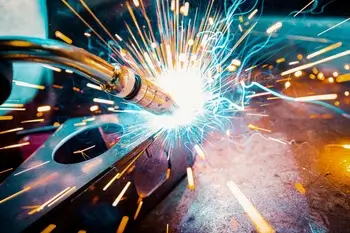
The key difference comes down to thermal conductivity and thermal expansion. Austenitic stainless steels, the most commonly welded family, including grades 304 and 316, conduct heat at roughly one-third the rate of carbon steel. Plain chromium (ferritic) grades fare slightly better at around half the rate of carbon steel, but still significantly lower than mild steel.
The practical consequence: heat builds up and stays local to the weld zone instead of dispersing through the parent material. Combined with a thermal expansion coefficient about 1.5 times higher than carbon steel for austenitic grades, this creates significant distortion risk on longer runs and thinner sections.
There is also a metallurgical risk specific to stainless steel: carbide precipitation. When austenitic stainless steel is held in the temperature range of roughly 425°C to 870°C for too long during welding, chromium combines with carbon to form chromium carbides at the grain boundaries. The chromium is drawn away from the surrounding metal, leaving those areas with reduced corrosion resistance. The result is a sensitised zone adjacent to the weld that is vulnerable to intergranular corrosion, even if the weld bead itself looks clean.
This is why process selection and heat input control are not optional considerations with stainless steel. They directly determine whether the finished joint retains the material’s core properties.
What Are the Main Arc Welding Processes for Stainless Steel?
Arc welding stainless steel primarily involves three processes. Each has a different balance of skill requirement, equipment complexity, finish quality, and suitability across material thicknesses.
SMAW: Stick Welding Stainless Steel
Shielded metal arc welding (SMAW), commonly called stick welding, uses a consumable flux-coated electrode. The flux produces shielding gas and slag as it burns, protecting the weld pool from atmospheric contamination without the need for a separate gas bottle. This makes SMAW a practical option for site work and outdoor applications where wind would compromise MIG or TIG shielding.
For stainless steel, the electrode must match or exceed the chromium and nickel content of the base metal to maintain corrosion resistance through the weld zone. The most common choices are:
- E308L: Used for welding 304 and lower-series austenitic stainless steels. The “L” designation indicates low carbon content, which reduces the risk of carbide precipitation.
- E316L: Matches the molybdenum content of 316-grade stainless, used where marine or chemical resistance is needed in the weld zone.
- E309L or E312: Used when joining stainless steel to mild steel (dissimilar metals), or when the base metal grade is unknown. These electrodes offer higher crack resistance and handle dilution at the interface.
Amperage for stainless stick welding runs around 10–15% lower than you would use for mild steel of the same thickness. For material under 3mm, a 2.4mm (3/32 inch) rod at 60–75 amps is a common starting point. Polarity should be DCEP (direct current electrode positive) for most stainless electrodes, which provides stable arc behaviour and good fusion. The welder needs to allow the metal to cool between passes.
Stick welding stainless is slower than MIG and requires careful slag removal between passes with a stainless steel wire brush, not a carbon steel wire brush, which would contaminate the surface and compromise corrosion resistance. It is a capable and cost-effective process, particularly for field repairs, smaller runs, and jobs where shielding gas logistics are impractical.
GMAW: MIG Welding Stainless Steel
Gas metal arc welding (MIG or GMAW) uses a continuously fed wire electrode and a separate shielding gas supply. For stainless steel, the shielding gas is typically a tri-mix blend (helium, argon, and a small percentage of carbon dioxide) rather than the straight CO2 sometimes used on mild steel. Straight carbon dioxide produces excessive spatter and oxidation on stainless.
MIG offers higher deposition rates than both stick and TIG, making it the preferred choice for production runs and heavier-section stainless fabrication where throughput matters. Pulsed MIG, which alternates between high and low amperage at a controlled rate, is particularly effective on stainless: it reduces heat input compared to constant-voltage MIG while still achieving good penetration and a cleaner bead appearance.
The process requires more equipment: a power source, wire feeder, and gas supply. It is not suited to outdoor environments where wind can disrupt the gas coverage. For workshop fabrication of structural and architectural stainless components, it is a practical and efficient option across a broad range of material thicknesses.
GTAW: TIG Welding Stainless Steel
Gas tungsten arc welding (TIG or GTAW) uses a non-consumable tungsten electrode to generate the arc, with filler metal added separately by hand if required. It offers the highest level of control of any arc welding process and produces the cleanest weld bead appearance, which is why it is the preferred process for sanitary-grade stainless work, thin-wall sections, and any application where weld aesthetics directly affect the finished product.
The two most significant challenges with TIG on austenitic grades are carbide precipitation and distortion, both of which trace back to heat control. Correct travel speeds, consistent arc length, and adequate gas coverage (including back-purging on tube or pipe joints to protect the underside of the weld) are standard practice.
TIG is slower than MIG and demands more operator skill, particularly for out-of-position welding. For thin stainless steel sheet, precision tube work, and fabrications where the weld will be visible in the finished product, it produces results that other processes cannot match.
How Heat Input Affects Stainless Steel Weld Quality
Heat input is the most critical variable in stainless steel arc welding. Too much heat, and carbide precipitation degrades the corrosion resistance of the heat-affected zone (HAZ). Too little, and proper fusion becomes difficult to achieve, producing a weak or incomplete weld joint.
In austenitic stainless steel, the HAZ passes through the carbide precipitation temperature range on both heating and cooling during each weld pass. The longer the metal dwells in that range, the more chromium carbides form at grain boundaries, meaning that managing interpass temperature is as important as controlling each individual pass.
Practical heat control measures include:
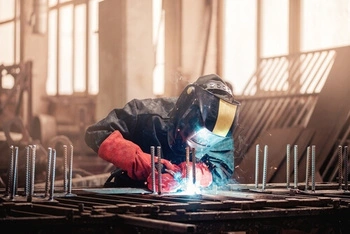
- Short weld passes: Limit individual runs to 20–30mm before allowing the metal to cool. This prevents the HAZ from dwelling too long in the carbide precipitation range.
- Correct electrode or wire diameter: On material under 3mm, using a smaller electrode reduces peak heat input. Never select a rod diameter more than half the plate thickness on single-pass joints.
- Copper backing bars: Placed on the reverse side of the weld joint, copper backing bars dissipate heat quickly and protect the back of the weld from atmospheric contamination.
- Backstep technique: For longer seams, welding short sections in a direction opposite to the final travel direction distributes heat more evenly and reduces cumulative distortion.
- Interpass temperature monitoring: Allowing the material to cool to below 100°C between passes is common practice on austenitic stainless to minimise sensitisation risk.
Using low-carbon “L-grade” filler metals, such as 308L or 316L, reduces the amount of carbon available for carbide formation at the grain boundaries. This is one of the most straightforward and reliable ways to manage sensitisation risk without changing the welding process itself. The Australian Stainless Steel Development Association’s welding guidance for stainless steels is clear that filler wires should be slightly over-alloyed so the cast microstructure of the weld bead matches or exceeds the corrosion resistance of the base material.
Choosing the Right Stainless Steel Grade Before You Weld
The welding process does not exist in isolation. It is shaped by the stainless steel grade being joined. Most stainless work in Australian commercial and industrial fabrication involves austenitic stainless steels, primarily 304 and 316.
Grade 304 contains around 18% chromium and 8% nickel. It is the most widely used austenitic grade: easy to weld, readily formable, and suitable for most general-purpose applications, including kitchen equipment, architectural structures, and industrial machinery. For welding, 308L is the standard electrode match, and post-weld annealing is often not required to restore corrosion resistance, though appropriate post-weld clean-up is recommended.
Grade 316 adds 2–3% molybdenum to a similar base composition, which significantly improves resistance to chloride corrosion. It is the preferred choice for coastal environments, marine fabrication, chemical processing, and food and pharmaceutical applications where regular exposure to salt, acids, or aggressive cleaning agents is expected. Welding 316 requires a 316L rod matched to the grade through the weld zone, and the low-carbon 316L designation also reduces sensitisation risk in the HAZ.
Ferritic stainless steels (plain chromium grades, such as 409 and 430) behave differently again: they have lower thermal expansion than austenitic grades, which reduces distortion risk. They are more susceptible to grain growth in the HAZ and require careful heat input management, as excessive heat can produce a brittle, coarse-grained heat-affected zone that compromises toughness.
Martensitic stainless steels are generally harder and more brittle. They often require preheat and post-weld heat treatment to avoid cracking, and are typically outside the scope of general fabrication welding without a specific approved procedure.
Post-Weld Treatment: Restoring Corrosion Resistance
Welding stainless steel inevitably produces heat tint: a discoloured band adjacent to the weld bead caused by surface oxidation during the welding process. This discolouration is not merely cosmetic. The heat-tinted zone has reduced corrosion resistance because the passive chromium oxide layer that protects the surface has been disrupted.
Post-weld treatment is required to restore full corrosion performance. The approach depends on the application and the level of corrosion resistance required:
- Wire brushing: Using a dedicated stainless steel wire brush (not shared with carbon steel tools) removes loose slag and weld spatter. It does not fully restore the passive film.
- Pickling: Chemical treatment with an acid paste or bath, typically nitric- or hydrofluoric acid-based, removes the heat-affected surface layer and dissolves iron contamination. Pickling is the most effective method for restoring corrosion resistance across the weld zone and is standard practice for food-grade and marine applications.
- Passivation: A follow-up treatment, usually citric or nitric acid, that promotes the formation of a new, stable chromium oxide layer across the cleaned surface.
- Mechanical polishing: Abrasive finishing can restore a consistent surface finish but does not chemically restore the passive film. It is typically combined with passivation for critical applications.
Wire brushing or buffing alone does not reliably remove the low-chromium, low-corrosion-resistance layer beneath the heat tint. For any application where corrosion performance matters, pickling followed by passivation is the recommended approach.
A Considered Approach to Stainless Steel Welding
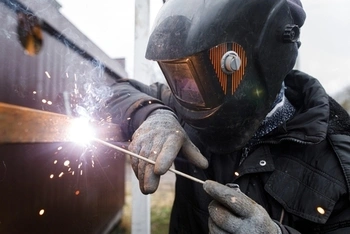
Arc welding stainless steel well requires more than technical proficiency at the weld itself. It requires a considered approach to process selection, electrode matching, heat management, and post-weld treatment, all shaped by the grade of stainless being used and the environment the finished component will operate in.
Welding procedure development and welder qualification for stainless steel are governed by Australian Standards including AS/NZS 1554.6, which sets out requirements for structural stainless steel welding and underpins quality fabrication across commercial and industrial sectors.
Whether the job is a structural stainless installation, architectural metalwork, or a fabricated component for a demanding industrial environment, getting the welding approach right from the outset avoids costly remediation later. Material thickness, joint design, welding position, and access conditions all influence which arc welding process and technique will give the best result for a given project.
If you have a stainless steel fabrication project and want to discuss the right approach, the team at Star Sheetmetal has been working with stainless and structural steel across Melbourne for over 26 years. Call us on (03) 9000 0280, or get in touch online.
Frequently Asked Questions
Can you weld stainless steel with a standard stick welder?
Yes. Shielded metal arc welding (SMAW) works on stainless steel provided you use the correct stainless steel electrode: 308L for grade 304, or 316L for grade 316. The key adjustments are running amperage around 10–15% lower than you would for mild steel of the same thickness, using DCEP polarity, and keeping weld passes short to manage heat buildup.
What is the best arc welding process for stainless steel?
It depends on the job. TIG (GTAW) gives the most control and the cleanest finish, and is preferred for thin material, sanitary applications, and visible welds. MIG (GMAW) offers higher speed and deposition rates for heavier sections and production runs. Stick (SMAW) is the practical choice for outdoor or site work where shielding gas is impractical. Each process produces different results depending on material thickness, joint design, and finish requirements.
References
Australian Stainless Steel Development Association (ASSDA). (n.d.). ‘Welding Stainless Steels’. Australian Stainless Steel Development Association. Brisbane, QLD: ASSDA. https://www.assda.asn.au/stainless-steel/welding
ADDLER. (2018). ‘When Should I Use 308L, 309L or 316L Filler Metal?’. ADDLER, 14 November. Melbourne, VIC: ADDLER Metalworking and Safety Products. https://www.addler.com.au/use-308l-309l-316l-filler-metal/
Australian Stainless Steel Development Association (ASSDA). (n.d.). ‘Grade Selection’. Australian Stainless Steel Development Association. Brisbane, QLD: ASSDA. https://www.assda.asn.au/stainless-steel/grade-selection
Weld Australia. (2026). ‘Stainless Steel Welding in Practice’. Weld Australia. Macquarie Park, NSW: Weld Australia. https://weldaustralia.com.au/stainless-steel-welding-in-practice/
Australian Stainless Steel Development Association (ASSDA). (n.d.). ‘Pickling and Passivation’. Australian Stainless Steel Development Association. Brisbane, QLD: ASSDA. https://www.assda.asn.au/stainless-steel/surface-finishes/pickling-and-passivation