
Welding is a core component of manufacturing, construction, automotive, and aerospace projects. It offers reliable methods for combining metal surfaces for long-lasting structures. But how does welding work?
Knowing its dynamics is essential for companies and clients across diverse industries who rely on durable and precise metal joining solutions.
In this article, we will tackle the principles of welding, the main welding methods, and the technologies and equipment that support industrial welding, helping you make informed decisions for your projects.
What Is Welding?
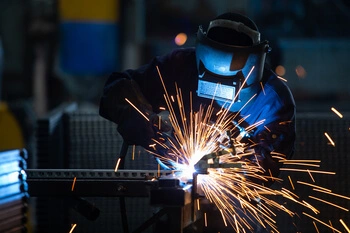
At its core, welding is a process that joins two metal surfaces by applying heat, pressure, or both to form a weld joint. This process creates a weld pool, where molten metal from the base metal and filler material mixes to produce a unified weld metal structure.
Unlike mechanical fastening methods, welding offers a continuous bond that often delivers better strength and integrity in structural applications.
The Role of Heat and Pressure
Most welding methods rely on an electric arc or other heat sources to melt metal surfaces. In some cases, mechanical pressure, as used in friction welding or ultrasonic welding, is sufficient to fuse metals without an open flame.
The choice of method depends on the commonly welded materials, desired joint strength, and project requirements.
Key Components in Welding
Welding involves several essential elements:
- Base Metal: The metals being joined.
- Filler Material: Often called filler wire or welding rod, used to bridge gaps.
- Welding Arc: The heat source, typically an electric current.
- Shielding Gas: Protects the molten metal from contamination, common in gas metal arc welding and gas tungsten arc welding.
- Welding Equipment: Includes welding machines, welding guns, and welding torches.
These components interact to ensure proper fusion and a strong, durable joint.
Arc Welding Explained
Arc welding is a widely used and versatile welding method in today’s industrial applications. It forms the foundation of many welding processes, using an electric arc to produce intense heat that melts the base metal and, when applicable, a filler material. As the metals cool, they solidify into a strong weld joint.
This process creates a stable weld pool capable of joining a wide range of commonly welded materials.
Within arc welding, there are several methods, each tailored to specific project requirements, material types, and production settings:
Shielded Metal Arc Welding (SMAW)
Also called stick welding or manual metal arc welding, this traditional process uses a flux-coated electrode to create the arc. It is highly adaptable and can be performed in various environments, making it a reliable choice for structural steelwork, repairs, and construction projects.
Gas Metal Arc Welding (GMAW)
Often called MIG welding or metal inert gas welding, this method uses a continuous wire feed as the filler material, combined with a shielding gas. It offers efficient deposition rates and consistent results, making it well-suited for manufacturing and industrial welding where productivity and quality must align.
Gas Tungsten Arc Welding (GTAW)
Commonly referred to as TIG welding or tungsten inert gas welding, this technique uses a non-consumable tungsten electrode to create a precise, stable welding arc.
It is favoured for projects demanding accuracy, clean finishes, and control and is ideal for thin sections, stainless steel, and the aerospace and automotive industries.
Flux-Cored Arc Welding (FCAW)
This method is similar to MIG welding, but the filler wire is flux-coated, producing its own protective gas during welding.
It performs well in outdoor or high-wind environments, providing deep penetration and high-strength weld metal, and it is particularly valuable in heavy fabrication and construction.
Submerged Arc Welding (SAW)
This technique forms the weld pool beneath a granular layer, shielding the molten metal from air exposure.
Submerged arc welding is often used for thick steel plates and large-scale assemblies, producing smooth, uniform, and high-integrity welds with minimal spatter.
Each arc welding process provides distinct advantages depending on the metal surface, desired weld characteristics, and project environment.
By understanding the role of electric current, shielding gas, and filler material in each method, businesses can choose the most suitable welding procedure to achieve efficient, durable, high-quality welds that meet their operational requirements.
Laser and Electron Beam Welding
Advanced beam welding methods, including laser and electron beam welding, use focused energy to melt metal surfaces. Laser beam welding is precise and ideal for narrow joints, while electron beam welding is often used in aerospace applications requiring accuracy and minimal thermal distortion.
Friction and Ultrasonic Welding
Friction welding generates heat through rotational friction between two metal surfaces, forming a solid-state weld joint. Ultrasonic welding uses high-frequency vibrations to join metals, commonly for thin sheets or electronic components.
Both methods avoid melting the base metal, offering alternative solutions where fusion welding is unsuitable.
Welding Equipment Essentials
The right welding equipment ensures efficiency, safety, and consistency. Key items include:
- Welding Machine: Provides the necessary electric current for arc generation.
- Welding Torch or Gun: Directs heat and filler metal to the weld area.
- Welding Helmet: Protects operators from bright light and welding fumes.
- Electrodes or Filler Wire: Selected based on base metal compatibility.
Choosing the appropriate equipment is essential for achieving high-quality welds while adhering to standards in industrial welding operations.
Commonly Welded Materials
Different projects require different materials, and understanding how each behaves during welding is key to achieving strong, consistent weld joints.
Here are some of the commonly welded materials across industries:
- Aluminium: Lightweight yet durable, aluminium requires controlled heat and a stable shielding gas environment. TIG welding and MIG welding are often chosen for their precision and smooth weld metal finish.
- Stainless Steel: Known for corrosion resistance and clean appearance, stainless steel demands careful heat control to prevent distortion. Gas tungsten arc welding (GTAW) is preferred for achieving high-quality, visually appealing results.
- Copper and Copper Alloys: Excellent thermal and electrical conductivity make these metals common in electrical, HVAC, and automotive applications. TIG and MIG welding techniques are typically used to manage heat input and avoid oxidation.
Selecting the right welding method, filler metal, and welding arc parameters for each metal surface helps ensure consistent fusion, reduced distortion, and durable performance in demanding industrial environments.
Welding Parameters and Techniques
Several factors influence weld quality:
- Arc Length: The distance between the electrode wire and base metal affects penetration.
- Electric Current: Must match the welding procedure requirements.
- Travel Speed: Controls the distribution of molten metal and overall joint strength.
Fine-tuning these parameters ensures high-quality welds and reliable weld joints.
Welding Procedures Across Industries
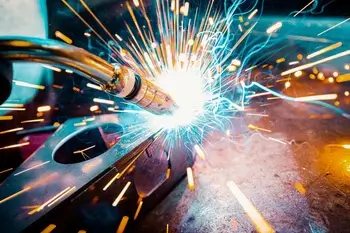
Welding procedures vary based on project scale and sector:
- Manufacturing industries often use MIG welding or submerged arc welding for structural assembly.
- Aerospace and automotive industries prefer TIG or laser welding for precision and reliability.
- Construction and infrastructure projects rely on stick welding for accessibility and versatility.
Understanding welding procedures helps you select an efficient technology that fits your needs.
Frequently Asked Questions
Can welding be automated for large projects?
Yes, automated welding systems integrate welding guns, continuous wire, and programmed paths for consistent welding work in large-scale operations.
What is a weld pool?
A weld pool is the molten zone created during fusion welding, where base metal and filler material mix to form weld metal.
What measures are essential during welding?
Welders use protective gear such as a welding helmet, gloves, and proper ventilation to minimise exposure to welding fumes, bright light, and molten metal. Following set standards in welding procedures also helps maintain compliance.
Conclusion
Understanding how welding works helps companies and project managers make informed decisions about metal joining solutions.
Multiple welding methods are available for different weld materials and industry requirements, from stick welding and MIG welding to TIG welding and beam welding. Using appropriate welding equipment and adhering to proper welding procedures ensure reliable, durable, and high-quality outcomes for industrial projects.
With a clear grasp of welding principles, technologies, and techniques, you can select the right approach for your manufacturing, construction, aerospace, or automotive projects. Welding is not only a technical process but a strategic choice that supports long-term structural integrity and operational success.
As a commercial steel fabrication company in Melbourne, Star Sheetmetal delivers precise, efficient, and high-quality welding solutions tailored to industrial, commercial, and structural applications. Our experienced team ensures every project meets strict safety standards and performance requirements.
If your business needs reliable, efficient, and precise welding solutions, our team is here to help. We can recommend suitable welding methods and technologies for your project’s scope and requirements.
Contact Star Sheetmetal at (03) 9000 0280 or 0433 217 574 to learn how we can provide professional welding expertise for your next project.
References
Grill, J. (2024, January 4). How To MIG Weld Aluminum: Beginners Guide (with Chart). Weld Guru. Retrieved November 4, 2025, from https://weldguru.com/mig-welding-aluminum/
The Manufacturer. (2021, May 13). Different Types of Welding and What They Are Used For. The Manufacturer. Retrieved November 4, 2025, from https://www.themanufacturer.com/articles/different-types-of-welding-and-what-they-are-used-for/
Underwood, M. (2023, January 27). Welding Aluminum and How It Compares to Welding Steel. The Fabricator. Retrieved November 4, 2025, from https://www.thefabricator.com/thefabricator/article/aluminumwelding/welding-aluminum-and-how-it-compares-to-welding-steel